
Dental anxiety is one of the most common reasons people delay care — and delaying care is exactly what turns a small, manageable problem into a bigger, more expensive one. If a bad experience years ago, or just the general unease of the sound and sensations, has kept you away, here's what actually makes a difference.
1. Say it out loud at booking
Telling the front desk you experience anxiety when you schedule — not when you arrive — lets us build in extra time, assign a provider who's a good fit, and prepare the room in advance. There's zero judgment in this conversation; it's one of the most common calls we get.
2. A signal to pause, anytime
Agreeing on a simple hand signal before starting means you can pause the appointment at any point without needing to speak around instruments in your mouth. Just knowing you have control tends to lower anxiety even if you never use it.
3. Nitrous oxide
Also known as laughing gas, it's inhaled through a small nasal mask, takes effect in minutes, and wears off just as quickly — you can drive yourself home afterward. It's a mild option well-suited to general nervousness rather than deep sedation needs.
4. Oral or IV sedation for bigger procedures
For more involved treatment — oral surgery, multiple implants, or extensive restorative work — oral sedation or IV sedation administered by trained professionals can allow you to remain calm and comfortable, often with little to no memory of the procedure afterward.
5. Distraction, deliberately
Every treatment room has a TV and Bluetooth headphones. It sounds small, but giving your attention somewhere else — a show, a podcast, your own music — measurably reduces perceived discomfort during longer appointments.
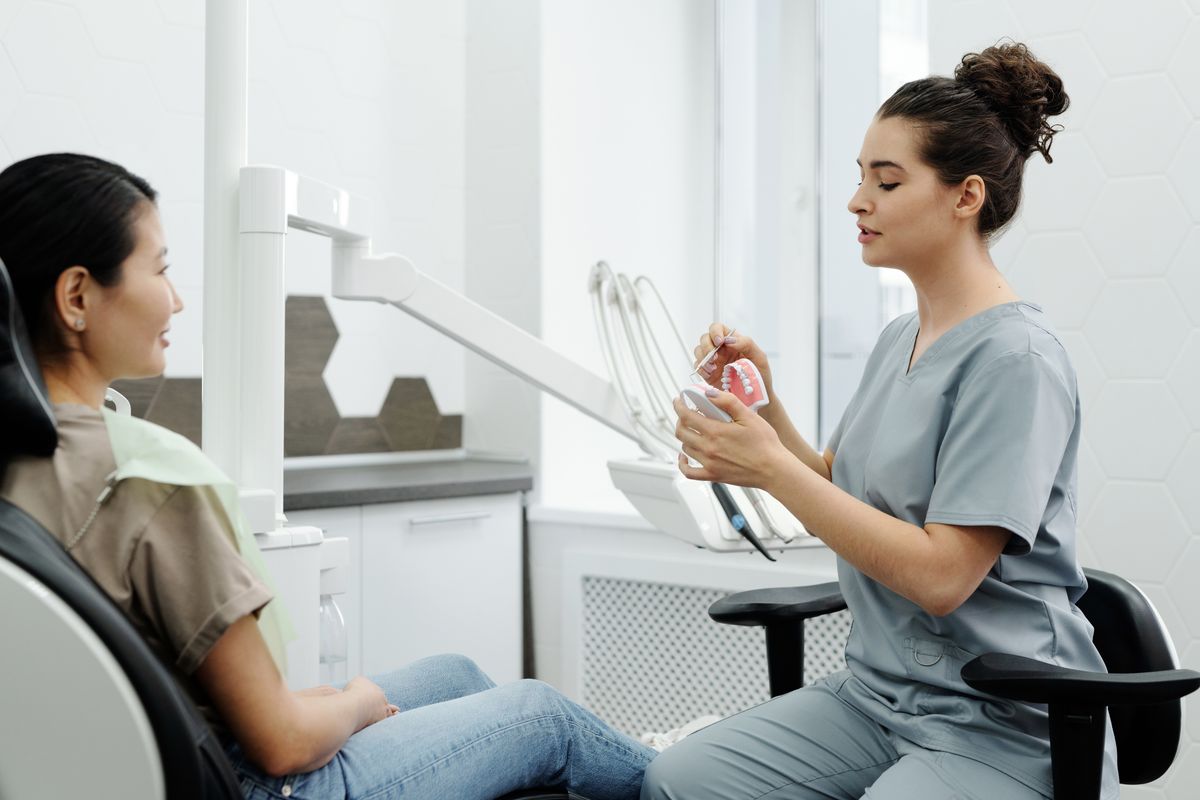
6. Clear, plain-language explanations
Uncertainty fuels anxiety more than almost anything else. We walk through what's about to happen, in order, before it happens — no surprise sounds or sensations.
7. Numbing the numbing
A topical gel applied before the anesthetic injection takes the edge off the part most people dread most, and a slow, steady injection technique reduces the sting significantly compared to a quick one.
8. No judgment about the gap since your last visit
Whether it's been one year or ten, our first conversation is always about where to go from here — never about where you've been. Shame keeps people away longer than almost anything else, and it has no place in that first conversation.
If anxiety has kept you from scheduling, mentioning it up front is the single most useful thing you can do — it changes how the entire visit is planned around you.
If anxiety has kept you from scheduling, our new patients page walks through exactly what to expect at your first visit.