"Do you floss?" might be the most dreaded question in dentistry — mostly because so many patients already know the honest answer is no, or not consistently. The good news is that flossing well once a day beats flossing perfectly twice a week, and the habit is easier to build than most people expect once you understand why it matters.
Why brushing alone isn't enough
A toothbrush cleans the flat surfaces of your teeth reasonably well, but it can't reach the tight contact points between teeth where plaque quietly builds up. Left undisturbed, that plaque hardens into tartar within about 24 to 72 hours — at which point a toothbrush can't remove it at all, and only a professional cleaning can. Daily flossing is what interrupts that process before it starts.
Once a day is genuinely enough
You don't need to floss after every meal. Once a day, ideally at night before bed, is enough to disrupt plaque before it hardens. What matters more than frequency is consistency — a daily habit protects you far more than sporadic marathon sessions.
The technique that actually matters
- Use about 18 inches of floss, winding most of it around your middle fingers so you have a clean section for each tooth
- Curve the floss into a C-shape against each tooth rather than snapping it straight down into the gum
- Slide gently beneath the gumline — a little resistance is normal, sharp pain is not
- Use a fresh section of floss as you move between teeth to avoid redepositing bacteria
What if your gums bleed?
Bleeding the first week you start flossing regularly is common and usually resolves within seven to ten days as your gums heal. Bleeding that persists beyond that is a sign of gum inflammation worth mentioning at your next cleaning, not a reason to stop flossing.
Floss picks, water flossers, and other alternatives
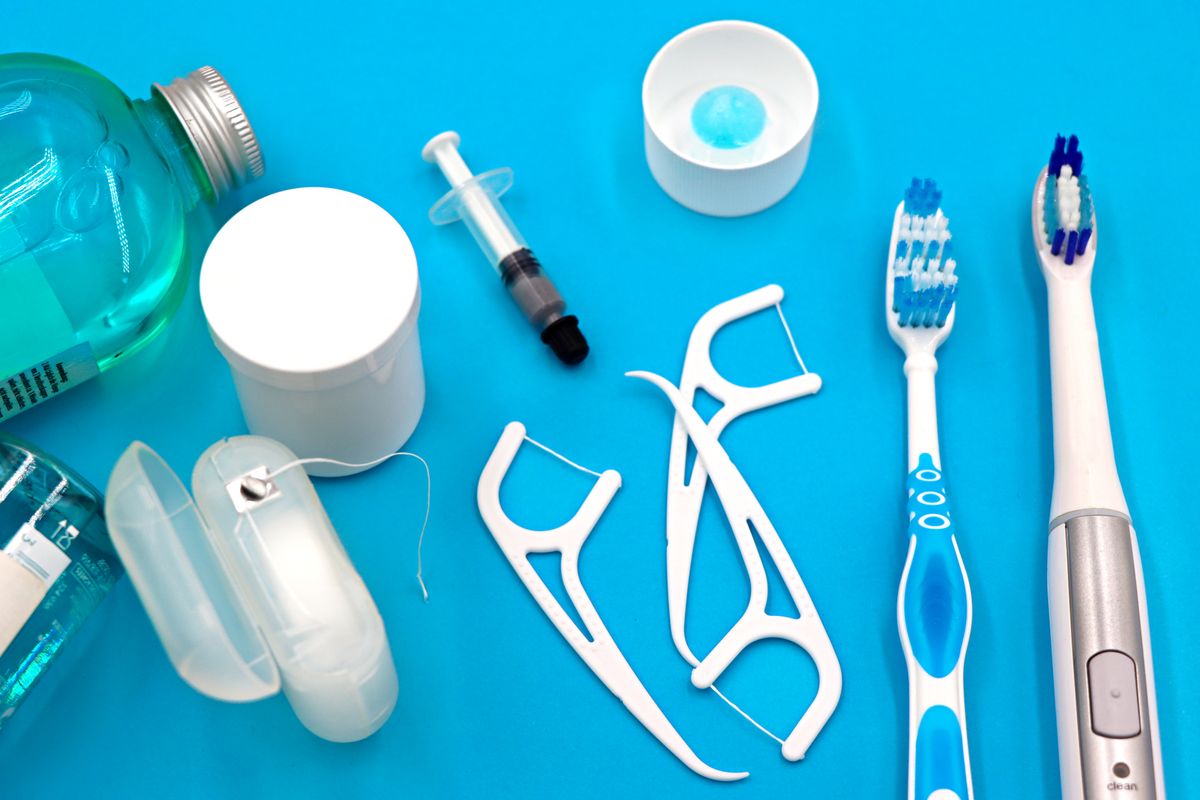
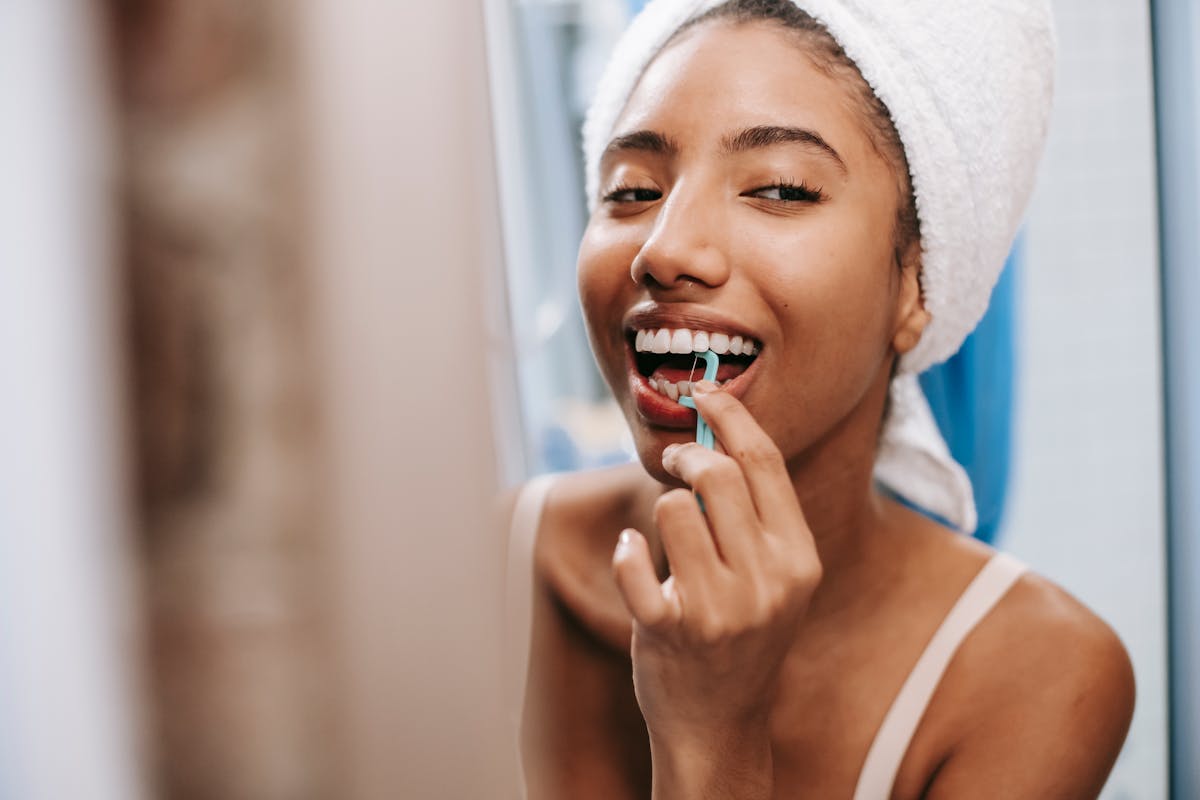
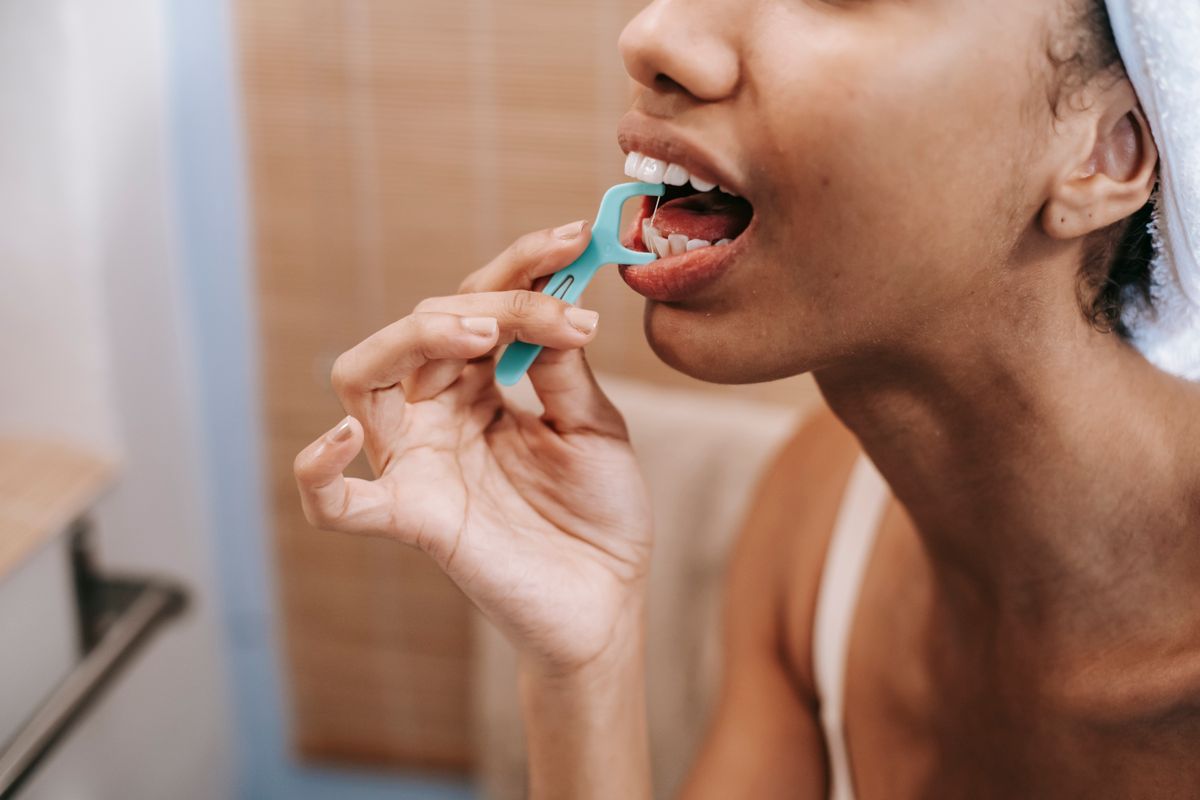
Traditional string floss remains the gold standard for cleaning tight contact points, but floss picks are a fine substitute if they're what actually gets used consistently. Water flossers are a helpful addition for patients with braces, bridges, or limited dexterity, though they generally work best alongside — not instead of — string floss for very tight spaces.
If flossing has never quite stuck as a habit, mention it at your next cleaning — we're glad to walk through the technique chairside until it feels natural rather than awkward.
Flossing technique is one of the things we happily walk through chairside — see our preventative care page for what else a routine visit covers.