
Jaw pain and poor sleep tend to show up on separate lists in a patient's mind — one goes to the dentist, the other to a doctor or a sleep clinic. But in our chairs, they're often the same conversation. Temporomandibular joint (TMJ) disorder and obstructive sleep apnea share overlapping anatomy, and treating one frequently improves the other.
How they're connected
TMJ disorder involves the joint and muscles that connect your jaw to your skull. When that joint is under strain — often from clenching or grinding overnight — the surrounding muscles tighten, which can also affect the position of the tongue and airway during sleep. Meanwhile, a narrow or recessed jaw, a common contributor to sleep apnea, changes how the muscles around the joint have to work, which can trigger or worsen TMJ symptoms. It's a two-way relationship.
Signs to watch for
- Clicking, popping, or grinding sounds when opening or closing your mouth
- Morning headaches or a sore jaw upon waking
- Waking up with worn, flattened, or chipped teeth
- A partner who reports snoring or pauses in breathing
- Daytime fatigue despite a full night in bed
- Neck or shoulder tension that doesn't have an obvious cause
How we evaluate it
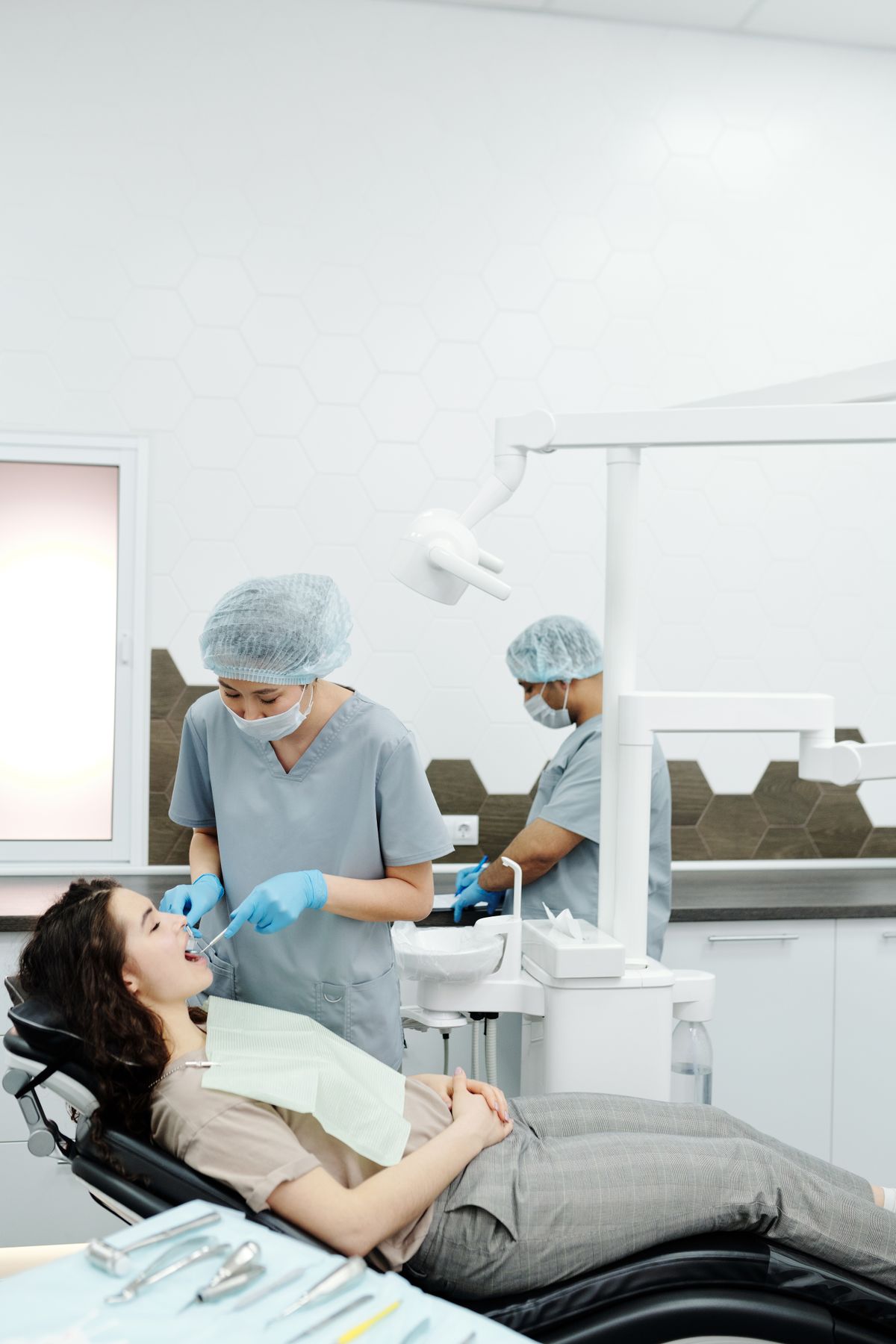
A bite analysis and a review of tooth wear patterns tells us a lot about clenching and grinding. If sleep apnea is suspected, we coordinate with a sleep physician on a home or in-lab sleep study to confirm a diagnosis before recommending an oral appliance — dental devices aren't a substitute for a proper diagnosis, but they're an excellent treatment once one exists.
Treatment options
For TMJ symptoms alone, a custom night guard repositions the jaw and reduces the load on the joint while you sleep. For mild-to-moderate obstructive sleep apnea, a precision oral appliance gently advances the lower jaw to keep the airway open — many patients find it far easier to tolerate night after night than a CPAP mask. Both are fabricated from digital impressions for a fit precise enough to sleep, talk, and drink water in comfortably.
If you're waking up with a sore jaw, a dull headache, or a partner nudging you awake for snoring, it's worth mentioning at your next visit — even if it feels like a conversation for a different kind of doctor.
If jaw pain or restless sleep sounds familiar, our TMJ and sleep apnea page covers the appliances we use to treat both.