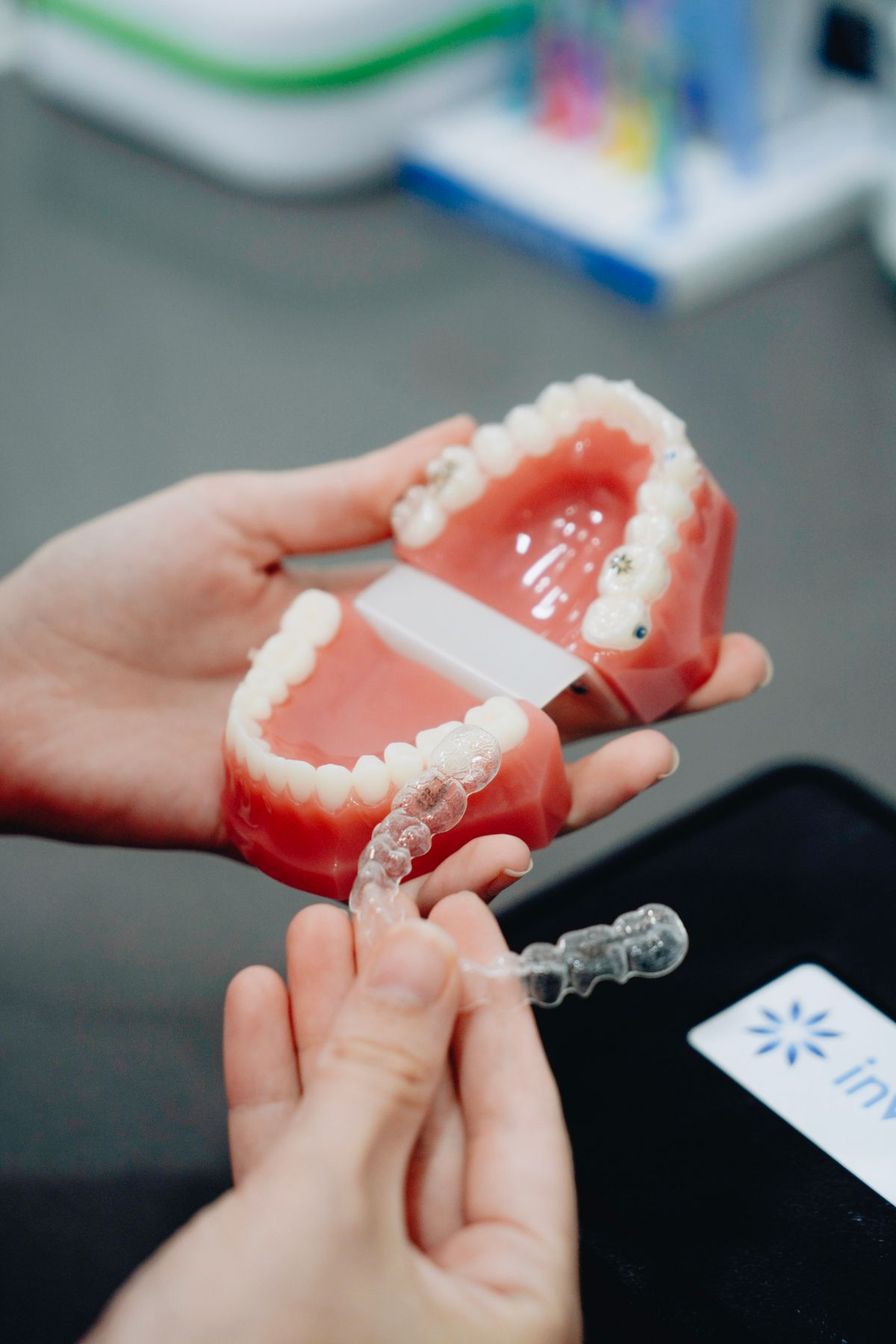

“Which is better, Invisalign or braces?” is the wrong first question. Both can move teeth to the same final result — the better question is which one fits the way you actually live. Here's a straightforward look at the real differences, not the marketing version.
Visibility
Clear aligners are, unsurprisingly, far less noticeable — a major reason adults gravitate toward them for professional or social reasons. Traditional brackets and wires are visible, though ceramic (tooth-colored) brackets or systems like LightForce narrow that gap considerably.
Discipline required
This is the trade-off nobody mentions enough: aligners only work if you wear them 20–22 hours a day. They come out to eat, which is convenient, but it also means they're easy to lose, forget, or simply not put back in. Braces require zero discipline — they're doing their job around the clock whether you think about them or not.
Comfort and food
Aligners have no wires or brackets to irritate your cheeks, and there are no food restrictions since you remove them to eat. Braces mean avoiding sticky, hard, and chewy foods for the duration of treatment, and occasional soreness after adjustments.
Treatment complexity
Aligners excel at mild-to-moderate crowding, spacing, and bite issues. More complex movements — significant rotations, major bite discrepancies, or cases involving jaw growth in younger patients — are often better suited to traditional braces or systems that use fixed brackets for more precise control.
Checkups and timeline
Both typically run in a similar overall timeframe for comparable cases, though aligners often require less frequent in-office visits since trays are issued in batches. Braces need adjustment visits roughly every 4–6 weeks.
So, which should you choose?
- Choose aligners if: your case is mild-to-moderate, you're disciplined about wear time, and visibility matters to you
- Choose braces if: your case is more complex, you'd rather not think about compliance, or you're a teen whose jaw is still developing
- Either way: a complimentary consultation with a digital scan will tell you which options are actually available for your bite — not just which one sounds more appealing
The best orthodontic option is the one you'll actually follow through on. A short consultation is the fastest way to find out which that is for you.
Still deciding? A consultation can tell you which option fits your case — see our Invisalign and orthodontics pages for more.