
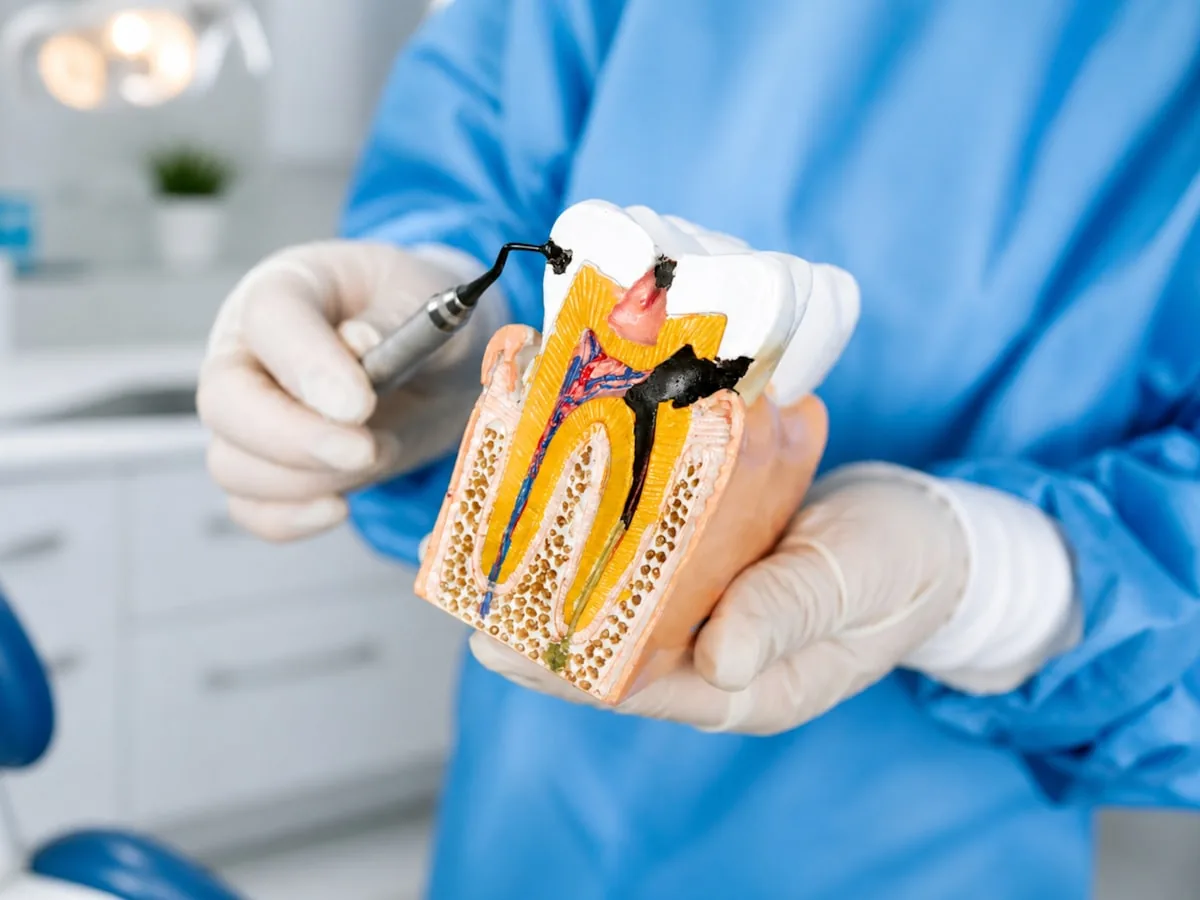
Modern Root Canal Therapy at ProCare Dental
Root canal therapy has evolved dramatically from the procedure that gave it a fearsome reputation decades ago. At ProCare Dental, we use the latest endodontic technology to save infected or damaged teeth that would otherwise need extraction — and the treatment itself is designed to relieve pain, not cause it. Inside every tooth is a soft tissue called the pulp, containing nerves and blood vessels. When that pulp becomes infected or inflamed, usually from deep decay, a crack, or trauma, the result is often a persistent toothache, sensitivity that lingers after hot or cold, or swelling in the gum. Left untreated, an infected tooth doesn't heal on its own — the infection can spread, form an abscess, and eventually cost you the tooth entirely.
How the Procedure Actually Works
Rather than losing the tooth, root canal therapy removes the infected pulp tissue, thoroughly disinfects the internal canal system, and seals the tooth to prevent reinfection. We use high-magnification operating microscopes to see the canal anatomy with exceptional clarity, electronic apex locators that precisely measure canal length, and nickel-titanium rotary instruments that clean and shape canals with minimal trauma to the surrounding tooth structure. This combination of technology is what makes modern root canal therapy dramatically more precise, and more comfortable, than the procedure was a generation ago. Most treatments are completed in a single 60-to-90-minute appointment, and patients consistently report that the experience is no more uncomfortable than getting a routine filling — the anesthesia that numbs the area is the same as for any other procedure, and once it takes effect, most of what you feel is simply the sound and pressure of the instruments, not pain.
- High-magnification operating microscope for precision
- Electronic apex locators to measure canal length exactly
- Nickel-titanium rotary instruments for gentle, efficient cleaning
- Most treatments completed in a single visit
Signs You May Need a Root Canal
The signs of a tooth that needs root canal therapy are often subtle at first: lingering sensitivity to hot or cold that stays for more than a few seconds, sharp pain when chewing or biting down, a tooth that has darkened compared to its neighbors, swollen or tender gum tissue near a specific tooth, or a recurring pimple-like bump on the gum. Any of these on their own is worth a look, and a combination — especially lingering sensitivity paired with pain on chewing — is a strong signal that the tooth's nerve is inflamed or infected. The earlier it's evaluated, the more likely we can resolve it in a single, straightforward visit.
Protecting the Tooth After Treatment
A tooth that has had a root canal is more brittle than one with an intact nerve, since it no longer receives blood supply from inside. That's why we typically place a custom crown over the treated tooth within a few weeks of the procedure — the crown protects the tooth from fracturing under normal chewing pressure and restores it to full function. Mild tenderness for two to four days after treatment is normal and manageable with over-the-counter pain relief; anything beyond that, or new swelling, is worth a quick call to our office.
Why We Prioritize Saving Your Natural Tooth
Our priority is always to preserve your natural tooth whenever possible, because nothing replaces or functions quite like the tooth you were born with — not even the best implant or bridge. Root canal therapy has one of the highest success rates in dentistry, and a properly treated and crowned tooth can function comfortably for the rest of your life. If you're experiencing any of the warning signs above, don't wait for the pain to peak before a same-week evaluation — early treatment is almost always simpler, faster and more comfortable than waiting.
What's included
- Single-visit root canals
- Retreatment
- Apexification
- Sedation available
Patient Reviews
For endodontics
"I was terrified — turned out completely painless. Wish I'd done it sooner."
— Linda C."Saved my tooth in one visit. The team was calm and reassuring."
— Hector V.
Frequently Asked Questions
- Does a root canal hurt?
- No more than a routine filling. Modern techniques and anesthesia make it comfortable.
- How long does it take?
- Most root canals are completed in a single 60–90 minute visit.
- Will I need a crown after?
- Yes, in most cases — a crown protects the treated tooth from fracture.
- Is there an alternative?
- The only alternative is extraction, usually followed by an implant or bridge.
Aftercare
Post-Op: Root Canal Therapy
Follow these instructions for a comfortable, complication-free recovery.
- Avoid chewing on the treated tooth until the final crown is placed.
- Mild tenderness for 2–4 days is normal — over-the-counter ibuprofen helps.
- Take any prescribed antibiotics for the full course, even if you feel better.
- Maintain normal brushing and flossing around the temporary filling.
- Schedule your permanent crown within 2–4 weeks to protect the tooth.
- Call if pain increases, swelling develops, or the temporary filling falls out.
Emergency? Call our Livingston office at (973) 533-1777.