
Restoring Strength, Function and Beauty
When a tooth is damaged, decayed or missing, restorative dentistry brings back what's been lost — not just appearance, but the actual strength and function you rely on every time you chew, speak or smile. At ProCare Dental, restorative care spans a wide spectrum, from a small, tooth-colored filling to a full-mouth rehabilitation, and we match the treatment to the actual extent of the damage rather than defaulting to the most invasive option. The guiding principle behind every restorative plan is conservation: we aim to preserve as much of your natural tooth structure as possible while still delivering a durable, long-term solution.
Our Restorative Treatment Options
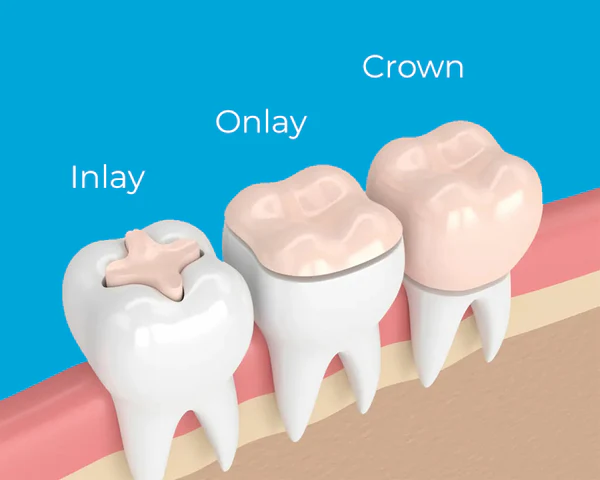
Tooth-colored composite fillings are the most conservative option, used for small to moderate cavities and blended invisibly with your surrounding enamel. When a cavity is too large for a filling but doesn't require a full crown, inlays and onlays offer a middle-ground repair that preserves more natural tooth structure than a crown would. For teeth that are cracked, heavily filled, or structurally compromised, an all-ceramic crown completely covers and protects the tooth, restoring it to full chewing strength. When one or more teeth are missing, a fixed bridge anchors a replacement tooth to the healthy teeth on either side of the gap. And for patients missing many or all of their teeth, full or partial dentures — which can be custom-fitted or stabilized with dental implants for a significantly more secure fit — restore both function and a natural-looking smile.
- Tooth-colored composite fillings
- Inlays & onlays for conservative cavity repair
- All-ceramic crowns
- Fixed bridges
- Full & partial dentures, with implant-stabilization available
Precision Through Digital Impressions
Restorative work depends on precision — a crown or bridge that doesn't fit exactly right can cause bite problems, sensitivity or premature wear. We use advanced digital impressions instead of traditional putty trays, capturing an exact 3D model of your teeth in minutes without the mess or discomfort of older impression materials. That digital model is sent directly to our ceramists, who craft each restoration to match your natural tooth shade, shape and translucency so closely that it's often difficult to tell, even for you, which tooth was repaired.
Choosing the Right Restorative Plan for You
Every restorative case is discussed in detail before we proceed, because there's rarely only one right answer — there's a range of options from the most conservative treatment to the most comprehensive, each with its own cost, timeline and longevity trade-offs. We walk through those options honestly, including what happens if you choose to wait, so you can make a decision that fits both your oral health needs and your budget. Our team works directly with your insurance to verify benefits in advance and explain any out-of-pocket cost before treatment begins, and we offer financing options for larger restorative plans so that comprehensive care stays accessible.
Life After Restorative Treatment
Well-made restorations are designed to function like natural teeth from day one. Composite fillings can be chewed on immediately since they're fully cured in the chair, while crowns and bridges typically need a short adjustment period as you get used to the slightly new feel of your bite — if anything ever feels high or uneven after 48 hours, a quick adjustment resolves it. With regular brushing, flossing and checkups, all-ceramic crowns commonly last 10 to 15 years or longer, and well-fitted dentures can provide years of comfortable, confident function. Whatever stage of damage or wear brought you in, our goal is a restoration you forget is even there.
What's included
- All-ceramic crowns
- Fixed bridges
- Inlays & onlays
- Full & partial dentures
Patient Reviews
For restorative care
"My new crown looks identical to my other teeth. Painless visit."
— Robert L."The implant-supported denture changed my life — I can eat anything again."
— Patricia M.
Frequently Asked Questions
- How long do crowns last?
- All-ceramic crowns typically last 10–15 years, often longer with good hygiene.
- Will my filling match my tooth?
- Yes — we use only tooth-colored composite fillings shaded to match.
- What's the difference between a bridge and an implant?
- A bridge anchors to neighboring teeth; an implant replaces the root and stands alone.
- Are dentures comfortable?
- Modern dentures are precisely fitted and can be implant-stabilized for the best fit.
Aftercare
Post-Op: Crowns & Bridges
Follow these instructions for a comfortable, complication-free recovery.
- Avoid sticky foods (caramel, gum) and very hard foods on the temporary.
- Slide floss out sideways around a temporary — don't pull up.
- Cold or pressure sensitivity for 2–4 weeks after the permanent is cemented is normal.
- Bite should feel even — if it feels high after 48 hours, call for an adjustment.
- Brush and floss your permanent crown like a natural tooth.
- Call if the temporary comes off, or the crown feels loose at any point.
Emergency? Call our Livingston office at (973) 533-1777.