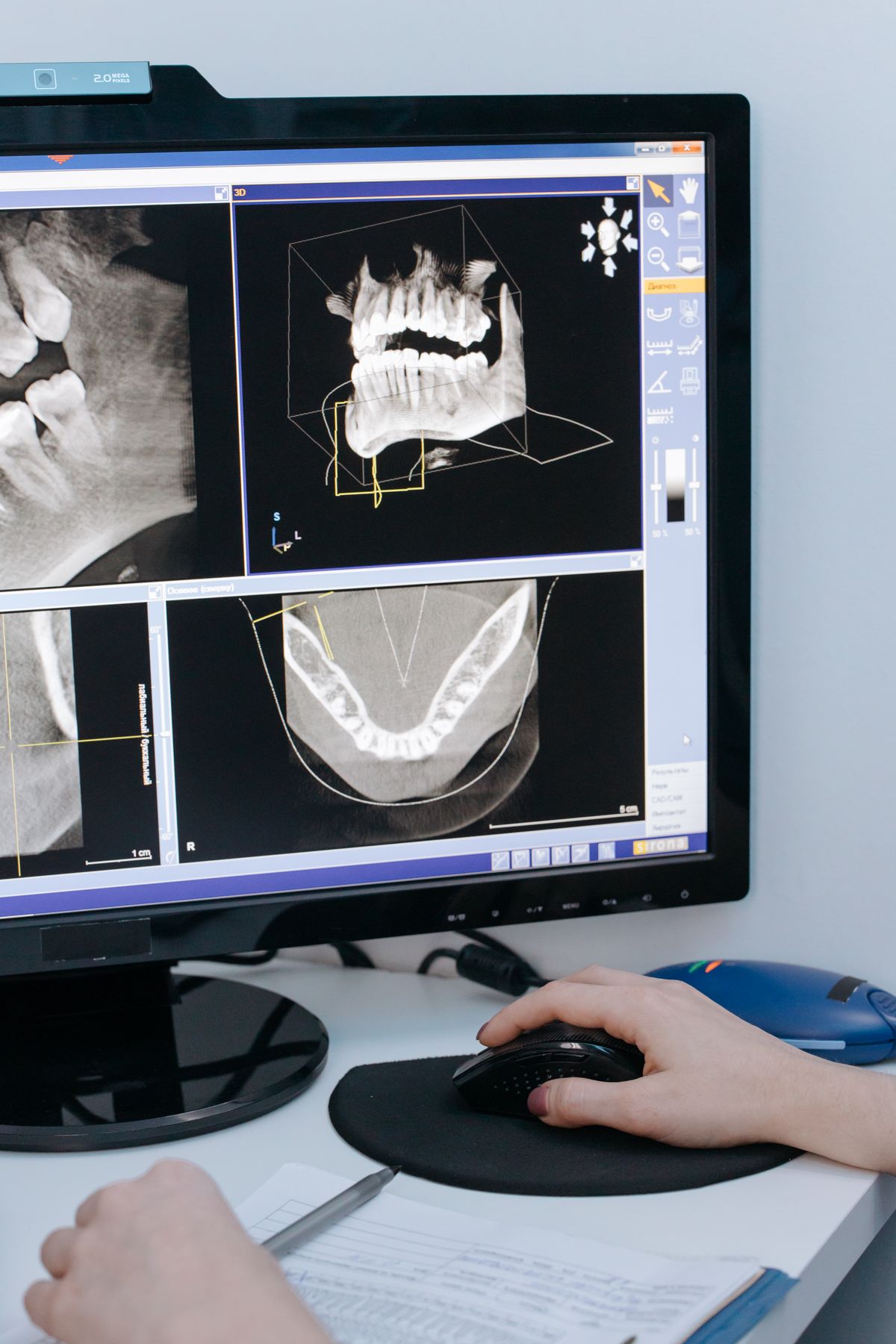
For most of dentistry's history, reading an X-ray has depended entirely on one trained eye spotting a subtle shadow, a hairline crack, or a few millimeters of bone loss — often in a matter of seconds between patients. AI-assisted diagnostics don't replace that expertise, but they do add a second, tireless set of eyes to every single image.
What the software is actually looking for
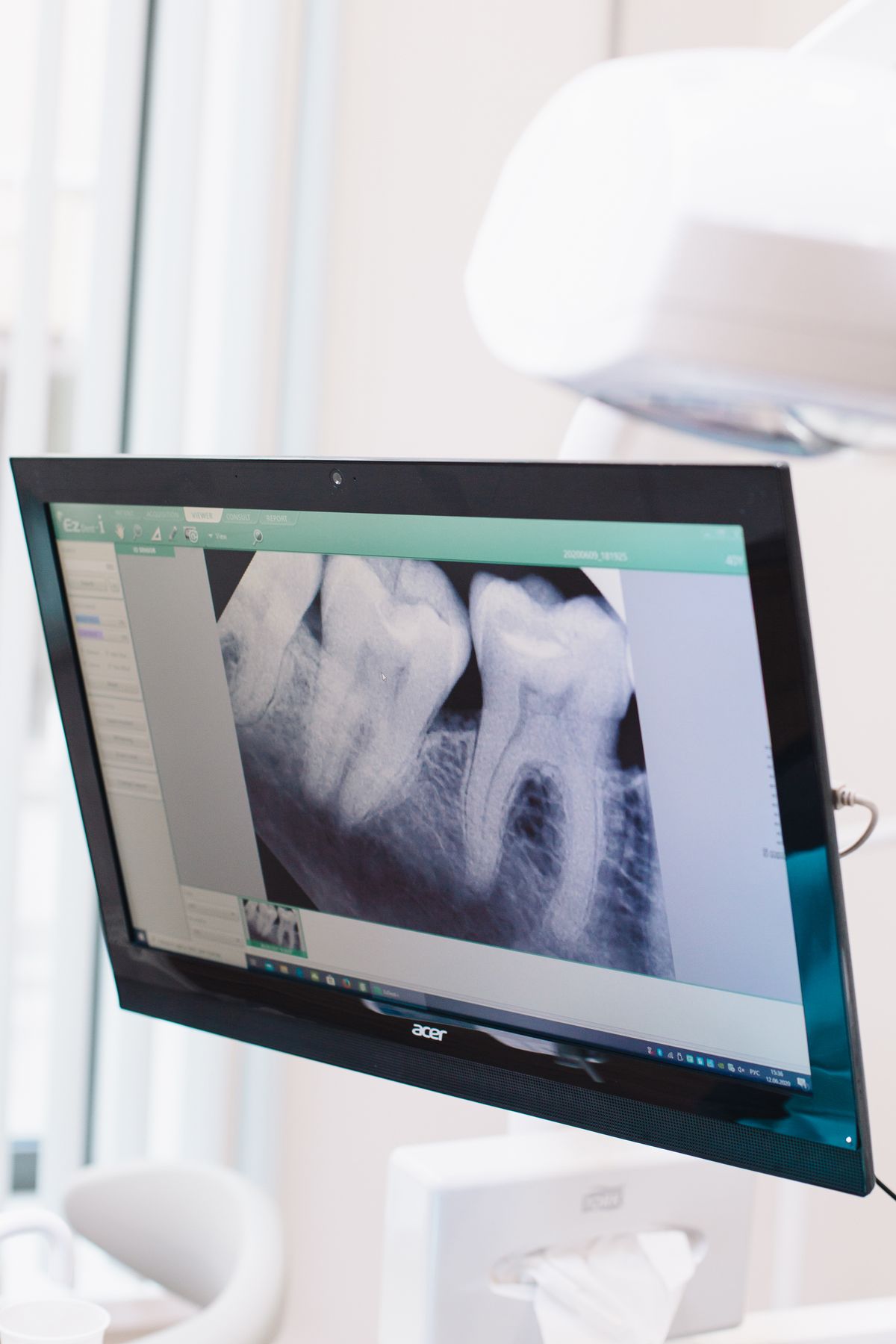
We use Pearl, an FDA-cleared platform, which analyzes bitewing, periapical, and panoramic X-rays in real time. It's trained to flag decay between teeth, bone loss along the gumline, calculus deposits, periapical lesions near the roots, and early cracks — the same categories a dentist reviews, just with a model that's processed a very large volume of images and never gets tired at 4pm on a Friday.
How it shows up during your visit
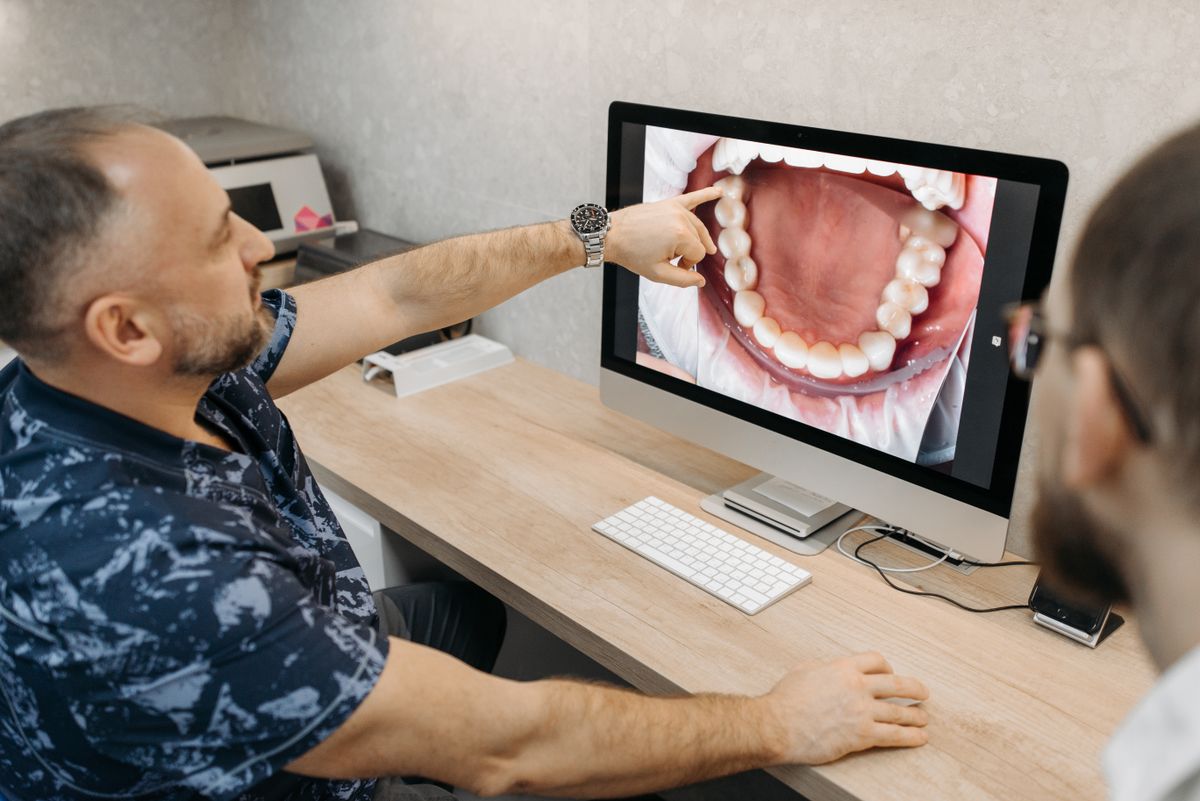
The software highlights areas of concern directly on your X-ray with color-coded annotations, which we pull up chairside and walk through with you. Instead of hearing “there's a small cavity here” and taking it on faith, you can see the exact spot the software flagged and understand why a filling, not a wait-and-watch approach, is the recommendation.
Why it doesn't replace your dentist
AI is pattern-matching against images — it doesn't know your medical history, your pain tolerance, your treatment goals, or how a finding fits into your broader oral health picture. Every flagged area is reviewed and confirmed by your dentist before it becomes part of a treatment plan. Think of it as a second opinion built into every appointment, not a diagnosis on its own.
The upside for patients
- Earlier detection of small cavities, often before they'd cause any sensation at all
- Visual evidence you can actually see, rather than taking a finding on faith
- More consistent detection across different reviewers and appointments
- The same HIPAA-compliant privacy protections as the rest of your chart
The technology is best understood as raising the floor, not replacing the ceiling — it catches the things that are easy to miss in a quick glance, so your dentist's judgment gets applied to a more complete picture.
Curious how Pearl AI fits into your visit? Learn more on our AI diagnostics page.